
Saram (Swara Yoga) And The World’s Breathwork Traditions: How They Compare
Pranayama, Vaasi, Qigong, Tummo, Wim Hof, Holotropic, Rebirthing — there are many ways to work with the breath. Here is what each one does, and why Saram begins somewhere different: by reading the breath before changing it.
Search for “breathwork” today and you will find a crowded shelf. Ice baths and fast breathing. Long music-led sessions on a mat. Slow counted breathing in a yoga class. Monks in the Himalayas warming their bodies in the cold. Each method has its own teachers, its own promises and its own followers.
People often ask me where Saram fits in all this. Is it another kind of pranayama? Is it like the Wim Hof Method? Is it the same as Swara Yoga? This article answers those questions plainly. I will describe each tradition fairly, say where the research is strong and where it is thin, and show you what makes the Saram way of working with breath its own path.
Why Compare Breathwork Traditions At All?
Because the word “breathwork” now covers practices that are almost opposites. Some methods ask you to breathe fast and hard for many minutes. Others ask you to slow down until the breath is barely felt. Some are thousands of years old and grew inside a whole way of life. Others were designed in the last fifty years.
If you pick a practice without knowing what it is built to do, you can end up in the wrong room. A person looking for calm before sleep does not need a session built to create intense experiences. A person who wants to understand their own daily rhythm will not find that in a method that only teaches one breathing pattern.
So the useful question is not “which breathwork is best?” It is “what does each one ask of the breath, and what is it for?”
| Tradition | Where it comes from | What it asks of the breath |
|---|---|---|
| Saram / Swara Yoga | Tamil Siddha and Indian tantric texts, including the Shiva Swarodaya | First read which nostril is flowing, then act in harmony with it |
| Pranayama | Classical Indian yoga | Regulate the breath through set patterns, counts and holds |
| Vaasi | Tamil Siddha tradition | Guide breath and life energy with steady awareness |
| Qigong / Xingqi | Chinese health and martial traditions | Slow breath joined to gentle movement and focus |
| Tummo / Vase breathing | Tibetan Buddhist practice | Breath holds and visualisation to build inner heat |
| Shamanic breathing | Modern sessions inspired by shamanic traditions | Deep, steady breathing to music or drum |
| Conscious Connected Breathing, Rebirthing, Holotropic | Western methods from the 1970s onwards | Continuous breathing with no pause, often for a long session |
| Wim Hof Method | Modern method from the Netherlands | Rounds of deep, fast breaths and holds, often with cold exposure |
What Is Saram? The Breath Science Behind Saram’s Whisper
Saram (சரம்) is the Tamil Siddha name for the breath science known in Sanskrit as Swara Yoga. You will also see it called Swar Shastra, Swar Vidya or Swara Vigyan. The best-known text of this science is the Shiva Swarodaya (also spelt Shiv Swarodaya), written as a conversation between Shiva and Parvati. Its well-known English commentary, Swara Yoga: The Tantric Science of Brain Breathing, was published by the Bihar School of Yoga.
The heart of this science is very simple to state. At most moments, one nostril carries more of your breath than the other. The tradition gives each pattern a name:
- Surya Swara (Pingala) — breath flowing more through the right nostril. The tradition links it with activity, warmth and outward effort.
- Chandra Swara (Ida) — breath flowing more through the left nostril. The tradition links it with calm, coolness and steady, settled work.
- Sushumna Swara — breath flowing evenly through both nostrils. The tradition treats this as a time for stillness, prayer and inner focus.
Modern science has its own name for part of this: the nasal cycle. Researchers have recorded since the late 1800s that the two sides of the nose take turns being more open. The length of each phase differs from person to person and day to day, so be careful of anyone who gives you one fixed number.
Where Saram goes further than a physiology textbook is in what it does with this knowledge. The old texts teach how to read the flowing breath and use it to choose the right moment for an action — a journey, a study session, a conversation, a quiet hour of practice. The Shiva Swarodaya even describes itself through the idea of phonetical astrology: reading the sound and flow of one’s own breath, rather than the stars, to understand timing. In the Siddha way of practice this sits alongside Vaasi, the work of guiding breath and life energy with awareness.
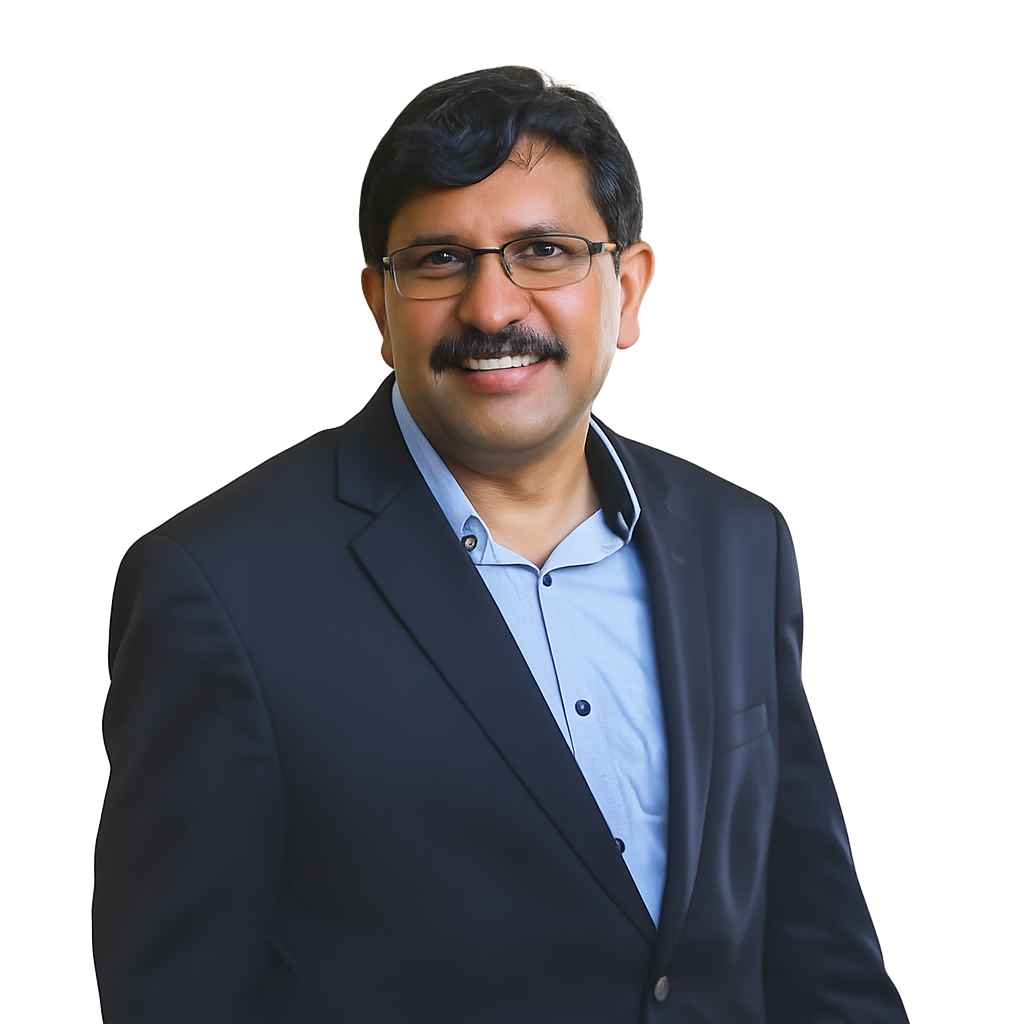
Most breathwork tells the breath what to do. Saram first listens to what the breath is already saying.
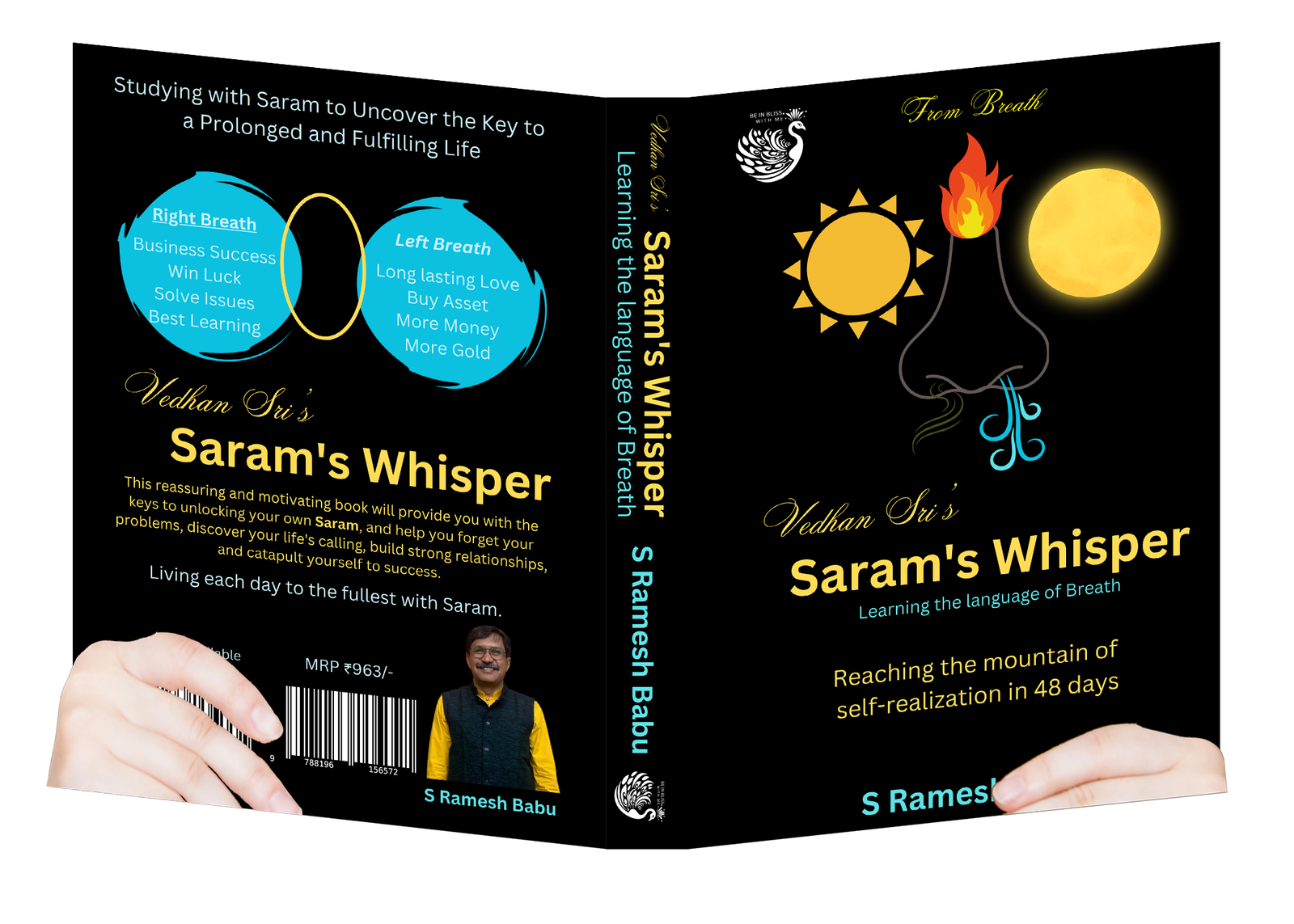
Saram’s Whisper — Learning The Language Of Breath
A 48-day journey through Saram, the Tamil Siddha name for Swara Yoga: Surya, Chandra and Sushumna breath, Vaasi, and the teachings of the Shiva Swarodaya, explained in plain language with simple daily practice.
How The Other Breathwork Traditions Work
Below is a short, fair description of each tradition. I am a teacher of Saram, not of these methods, so I describe them as their own teachers and the published record describe them.
Pranayama
Pranayama is the classical yoga practice of regulating the breath. It uses set patterns: slow counted breaths, breath holds, alternate-nostril breathing, and forceful methods such as Kapalabhati and Bhastrika. It is the closest cousin of Saram, and the two share a vocabulary of Ida, Pingala and Sushumna. The difference is the starting point. Pranayama usually begins by applying a pattern. Saram begins by observing which breath is already flowing, and then works with it. (For how slow breathing settles the nervous system, see my earlier article on nervous system regulation.)
Vaasi
Vaasi is a Tamil Siddha practice of guiding breath and life energy with steady awareness. In the Siddha tradition it belongs inside the same family as Saram rather than beside it. If Saram is learning to read the breath, Vaasi is learning to move with it consciously. In my own teaching the two are always taught together.
Qigong And Xingqi
Qigong is a broad Chinese family of practices that join slow breathing with gentle movement, posture and focused attention. Xingqi, often translated as “moving the qi”, describes guiding breath and energy through the body. Like Saram, Qigong treats breath as part of a wider life force rather than just air. Its focus is usually on movement and flow through the body, while Saram’s focus is on the nostril rhythm and timing.
Tummo And Vase Breathing
Tummo, or “inner fire”, is a Tibetan Buddhist meditation practice that combines breath holds with visualisation. Vase breathing is a key part of it: the breath is held low in the belly, like air in a vase. Studies of experienced practitioners, including work by Herbert Benson in 1982 and Maria Kozhevnikov in 2013, recorded rises in body temperature during the practice. Tummo is traditionally taught within a long lineage of meditation training, not as a stand-alone technique.
Shamanic Breathing
“Shamanic breathing” usually describes modern group sessions that draw inspiration from shamanic traditions. People breathe deeply and steadily, often lying down, to drumming or music, with the aim of reaching a different state of awareness. Methods vary a great deal from teacher to teacher, so it is worth asking exactly what a given session involves before you join.
Conscious Connected Breathing
Conscious Connected Breathing (often shortened to CCB) is a pattern rather than a single school: the in-breath and out-breath are joined in a continuous circle with no pause between them. It is the core of several Western methods, including the next two.
Rebirthing Breathwork
Rebirthing was developed by Leonard Orr in the 1970s. It uses connected breathing, usually guided one-to-one, with the aim of releasing old emotional patterns. It is a modern method and should not be confused with the ancient Indian breath sciences, even though some of its language sounds similar.
Holotropic Breathwork
Holotropic Breathwork was developed by the psychiatrist Stanislav Grof and Christina Grof. Sessions combine faster, deeper breathing with loud evocative music, usually for several hours, with a partner sitting beside each breather. The published record notes tingling, cramping and strong emotional experiences, and advises that it should not be done alone. It also lists conditions — such as heart disease, high blood pressure, glaucoma, seizure disorders and some mental health conditions — for which it is not advised.
The Wim Hof Method
The Wim Hof Method, named after the Dutch teacher Wim Hof, combines rounds of deep, fast breathing and breath holds with cold exposure and commitment training. A 2014 study by Matthijs Kox and colleagues found that trained volunteers could influence parts of their stress and immune response in a laboratory setting. It was a small study, and its findings should not be stretched into promises. The method’s own teachers warn against doing the breathing in water or while driving, because the holds can cause fainting.
Learn It In Person — Upcoming Live Workshops
Supporting the Special Child — 14–15 November 2026, JP Nagar, Bengaluru. Breathe. Reset. Sleep. — 12–13 December 2026. Small groups, limited to 25 places.
So What Makes Saram Different?
Put side by side, the differences become clear. Most modern breathwork is a technique: a pattern you apply for a session to create a state. Saram is a language: a way of reading what your breath is already doing through the day, and choosing your actions in harmony with it.
- It starts with observation. Before any practice, you notice which nostril is flowing. Nothing is forced.
- It is gentle. There is no rapid breathing, no long holds and no hyperventilation in the beginner practice.
- It runs all day, not just in a session. You can check your breath before a meeting, a meal, a journey or sleep.
- It connects breath to timing. The Swara texts teach which kinds of action suit which breath — an idea no Western breathwork method contains.
- It belongs to a living Siddha tradition, alongside Vaasi and Varmam, rather than being a stand-alone exercise.
None of this makes the other methods wrong. Many people find real value in them. But if what you want is to understand your own rhythm, quietly and safely, Saram is built for exactly that.
Saram First Reset™ — Your First Five Days Of Practice
Five short days of guided Saram practice: learn to notice your breath, settle it, and build a small daily habit you can keep.
Try It: Find Your Flowing Breath
The Nostril Check — Two Minutes
Some people feel a clear difference at once; some notice nothing at first. Both are normal. The skill of reading the breath grows with simple, regular attention.
Please look after yourself first. This check is observation only — no holding, no forcing. If you have a blocked nose, a breathing condition, or feel dizzy or unwell at any point, stop and rest, and speak to your doctor about any ongoing symptoms. Fast or forceful breathing methods should only be learned from a qualified teacher.
Final Thoughts
The world has many breath traditions, and each one was built for a purpose. Pranayama regulates. Qigong moves. Tummo warms. Holotropic, Rebirthing and the Wim Hof Method push the breath to create strong experiences. Saram does something quieter and older: it teaches you to listen. Once you can read your own breath, every other practice becomes easier to understand — and you have a guide you carry with you all day.
Learn The Language Of Your Breath
Our Inner Circle community call runs every Thursday, 7.30–9.30 PM. It is free and it is live. Write to connect@vedhansri.com to join.
Join Thursday’s call — free Saram First Reset™ · ₹499
The Reset is five short days, self-paced. Most people come to the free call first.
5,500+ students trained · 28+ years of practice · 27+ master teachers learned from · 3 national recognitions
References & Further Reading
- Shiva Swarodaya, classical Sanskrit text on Swara Yoga (dialogue of Shiva and Parvati).
- Swami Muktibodhananda, Swara Yoga: The Tantric Science of Brain Breathing, Bihar School of Yoga, 1984.
- Kox M. et al., “Voluntary activation of the sympathetic nervous system and attenuation of the innate immune response in humans”, PNAS 111(20), 2014.
- Kozhevnikov M. et al., “Neurocognitive and somatic components of temperature increases during g-tummo meditation”, PLoS ONE 8(3), 2013.
- Benson H. et al., “Body temperature changes during the practice of g Tum-mo yoga”, Nature 295, 1982.
- Wim Hof Method, official safety warnings (wimhofmethod.com).
- “Breathwork (New Age)” — overview of Rebirthing (Leonard Orr) and Holotropic Breathwork (Stanislav Grof), including published safety cautions.
- Vedhan Sri (S. Ramesh Babu), Saram’s Whisper — Learning the Language of Breath.
This is wellness education, not medical treatment. It does not replace advice from your doctor. Results vary from person to person.